Comprehensive Eye Exams at Premier Eye Center
Your vision deserves more than a quick prescription check.
Premier Eye Center strives to provide comprehensive, primary eye care for the whole family. Comprehensive eye exams go beyond a basic vision screening and involve a series of visual diagnostic testing as well as medical evaluations. There are several eye and vision problems that do not have obvious symptoms or signs, and Premier Eye Center has the ability to diagnose and treat eye conditions. Prevention is key to sustaining healthy eyes!
Click Here & Schedule An Appointment Today
Common Questions About Comprehensive Eye Exams
Bring your current glasses or contact lenses, your insurance card, a list of any medications you’re taking (including supplements), and the name of any eye doctors you’ve seen before if you’d like records transferred. If you have a family history of glaucoma, macular degeneration, or diabetes, mention that when you check in — it helps your doctor know where to look most closely.
Yes — Premier Eye Center accepts most major medical insurance plans and a few select vision plans such as VSP, EyeMed and Summit. Because insurance coverage varies by plan and by what’s being billed (routine vision vs. medical eye care), our front office team can help verify your benefits before your appointment. Some services, such as advanced diagnostic imaging, procedures or treatment for a diagnosed condition, may be billed to medical insurance rather than vision plans which generally cover materials (eyeglasses or contacts). If you have questions about what your plan covers, call us before your appointment.
Dilation isn’t required for every patient, but it does allow our doctors a more complete view of the interior of the eye — particularly the retina and optic nerve. If your eyes are dilated, you’ll experience blurred near vision and light sensitivity for approximately two to three hours afterward. We provide disposable sunglasses and recommend having a driver if possible, though many patients drive home without difficulty. We use mild, fast-acting drops that typically wear off sooner than ones used at other practices. Your doctor will discuss whether dilation is recommended at your visit.
A vision screening—the kind you’d get at a school, a DMV office, or a basic exam from a retail store, warehouse store, or big box store—checks whether you can see clearly at a distance. That’s useful, but limited. A comprehensive eye exam evaluates the full health of your eye, inside and out: the retina, optic nerve, cornea, lens, eye pressure, binocular coordination, peripheral vision, and more. Many serious conditions, including glaucoma and early macular degeneration, don’t affect your ability to read a letter chart until significant damage has already occurred. A screening won’t catch them. A comprehensive exam will.
Plan on 60 to 90 minutes for a complete exam, especially if this is your first visit or if dilation is recommended. The extra time covers paperwork, diagnostic testing, doctor consultation, reviewing your results and making any purchases in our optical. If you have specific concerns or complex conditions being monitored, your doctor will let you know if additional time should be set aside.
There’s no single answer — it depends on your age, health history, and risk factors. As a general guideline:
- Adults with no known eye conditions: every one to two years
- Adults over 60, or with risk factors like diabetes, high blood pressure, a family history of glaucoma, or a high glasses prescription: annually or as recommended
- Children: at key developmental stages, or as advised — catching vision problems early makes a real difference
- Your doctor will recommend a schedule based on your specific situation.
What’s Included in Every Exam
Why Choose Premier Eye Center
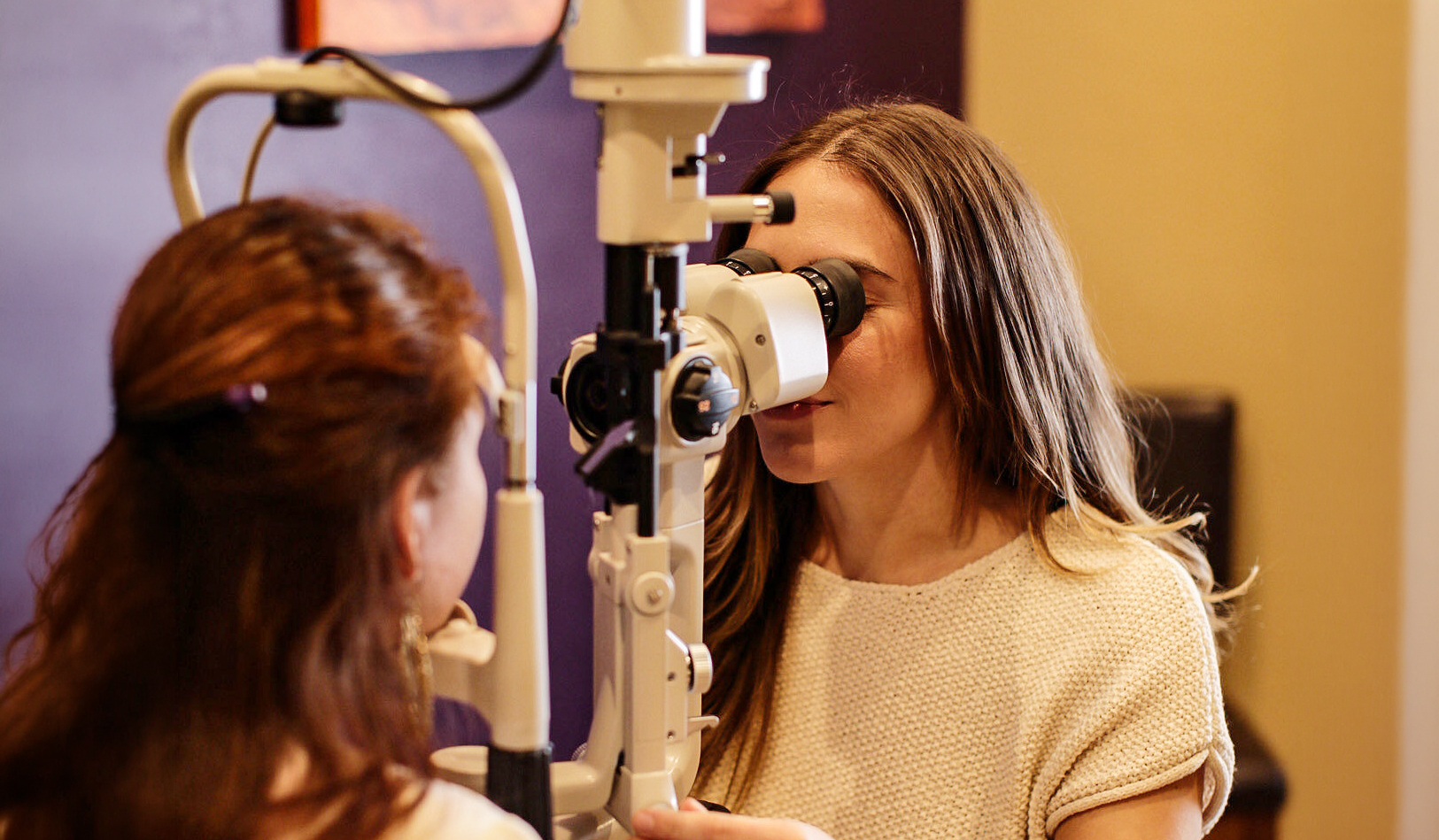
What separates a Premier Eye Center exam isn’t just the equipment — it’s that our doctors explain your results before you leave. Our diagnostic imaging includes the Optovue iVue SD-OCT, which produces detailed cross-sections of retinal tissue and the optic nerve, enabling earlier detection of glaucoma, macular degeneration, and diabetic changes. Images from our Canon Digital Imaging System are compared to previous visits so subtle changes don’t go unnoticed year to year.
If your exam indicates a need for additional testing — corneal mapping with our Topcon Topographer, electrodiagnostic testing with the Diopsys Nova, or corneal thickness measurement with our Sonogage Pachymeter — those services are available right here in our office.
When Exam Findings Lead to Treatment
Our doctors are licensed not just to detect eye conditions, but to treat them. If your exam reveals dry eyes, elevated eye pressure, early macular changes, an infection, or another condition, you won’t be sent elsewhere to start over. Management or treatment can begin within the same practice — including our dedicated dry eye therapy program using InMode Forma-I and Lumecca-I technology, specialty contact lens options including scleral lenses fit right here in Prescott (no trip to Phoenix required), and co-management for LASIK and cataract surgery.